
Social media is a relatively new and young phenomenon, where everything – once published – becomes “yesterday’s news” after a day or two. For this reason, it is so amazing that there – of ALL places – it’s possible to find treasures and receive inspiration from things that had happened even before we were born, and that we wouldn’t have come across so easily, otherwise.
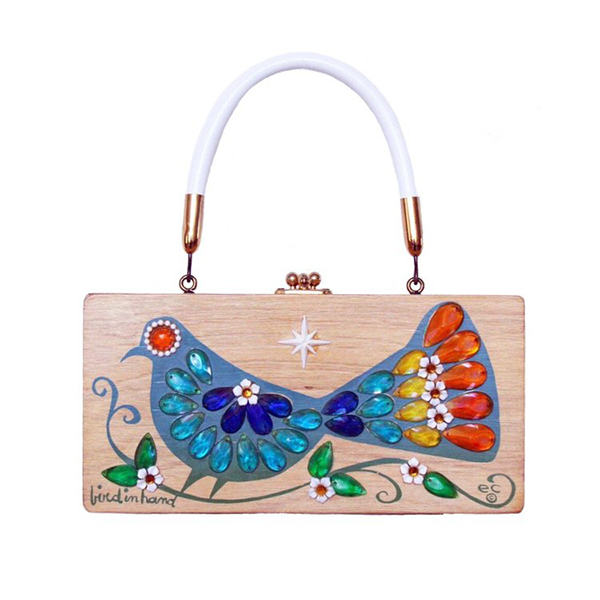
I was introduced to Enid Collins’ bags while browsing through the Instagram feed of Victoire de Castellane, the creative director of Dior jewelry. She had uploaded a picture of her collection of Enid Collins bags a few months ago, and I was quite amazed to meet them for the first time.
I was enchanted by this picture – it felt like I had found a treasure, and that I must investigate what lies behind this visual and nostalgic magnificence, which Victoire (what a beautiful name) enjoys collecting. And indeed, I became acquainted with a world of richness and charm – a time capsule from the sixties and seventies of the last century – and with a creative and entrepreneurial woman.
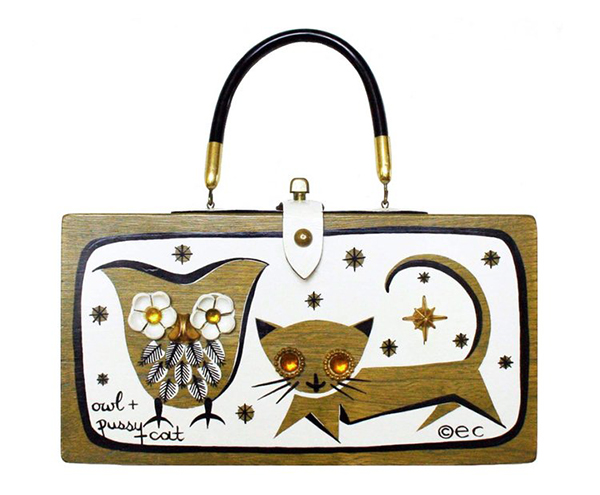
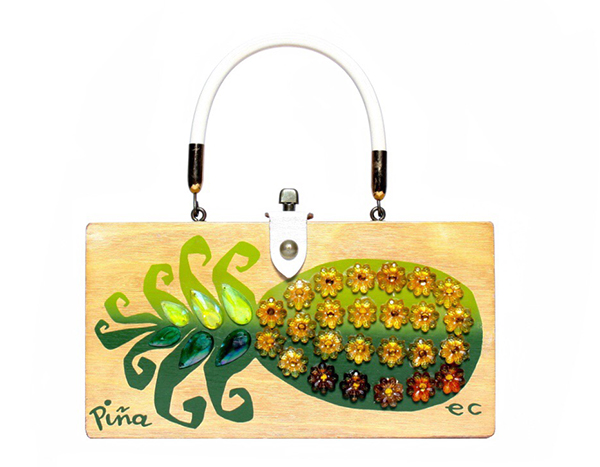
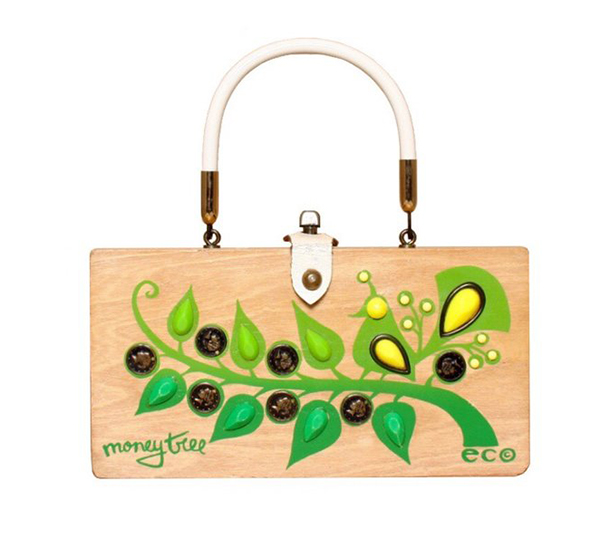
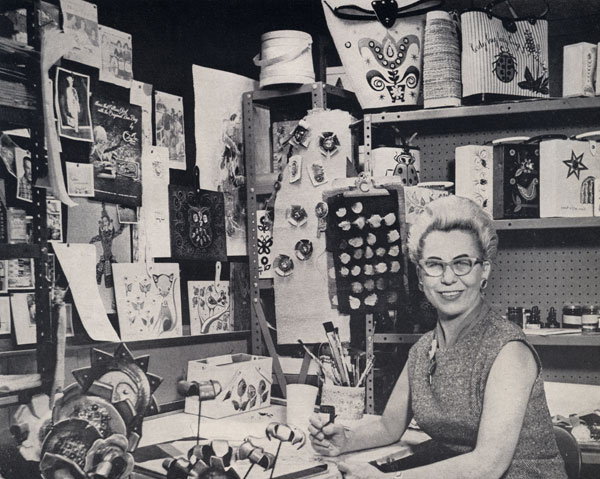
After World War II, Enid Collins and her husband, Fred, bought a small farm in Texas. She studied fashion and art while he studied engineering, and sculpted as a hobby. They were looking for a way to increase their income from the farm, so Enid began designing bags at home, by her kitchen table, while Fred helped with the technical work – by designing the connectors, for example.
The first bags were made out of very expensive materials – such as leather, for example, or imported cotton. But Enid quickly came up with a great idea – wooden box cases, which involved lower cost and therefor were affordable for more people (canvas bags were added later on, but in this post I will focus on the box bags only, simply because they are much more to my liking).
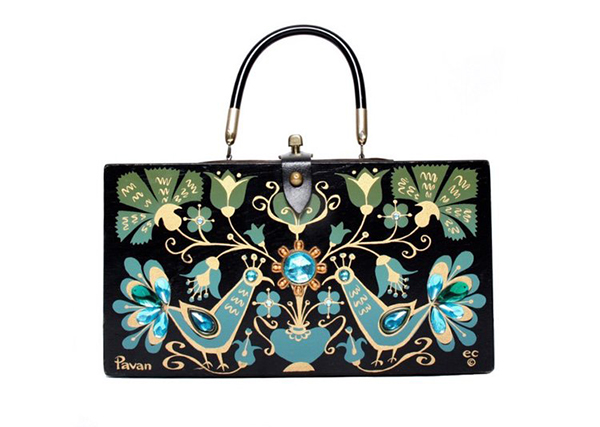
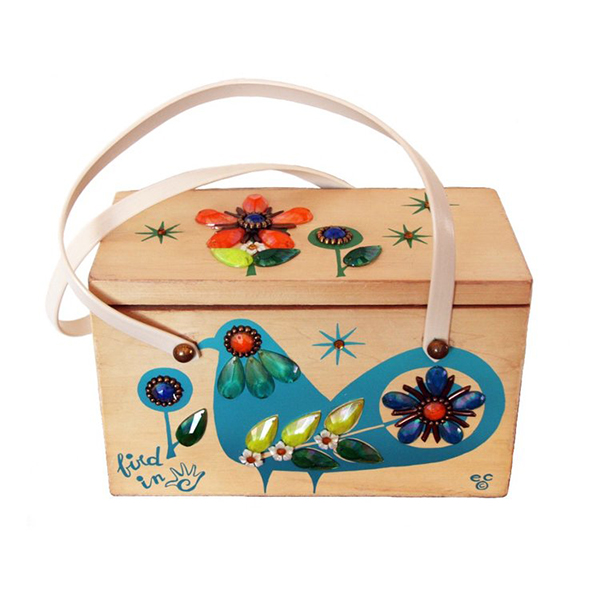
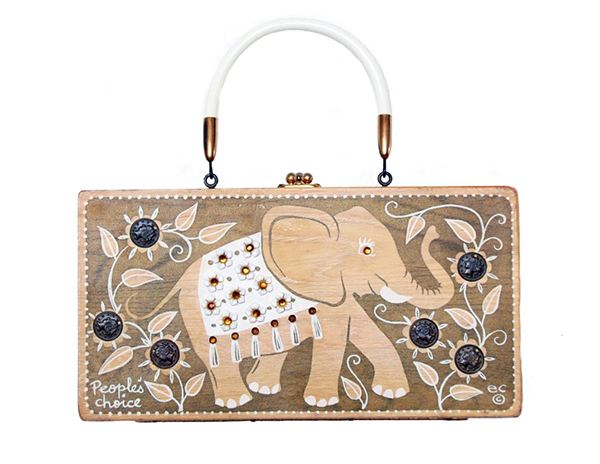
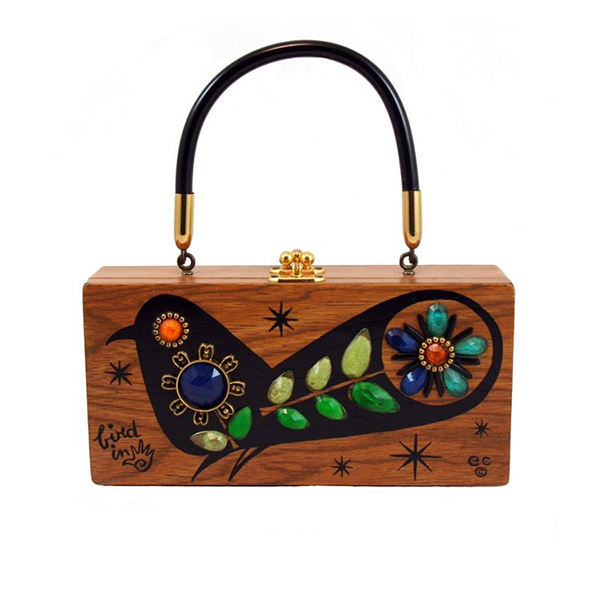
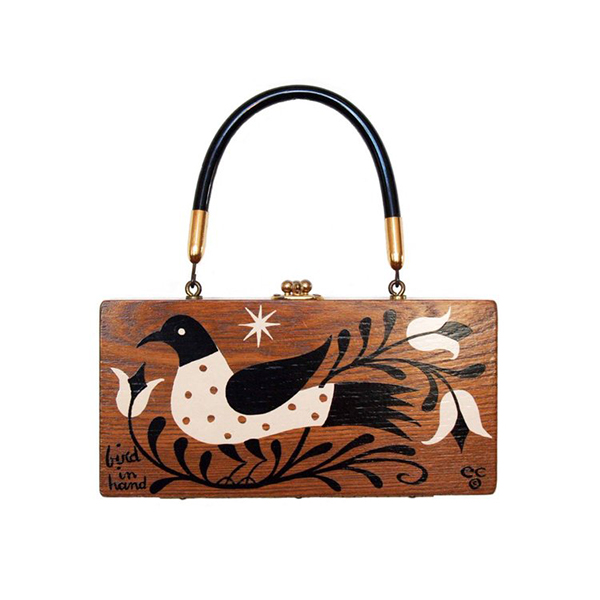
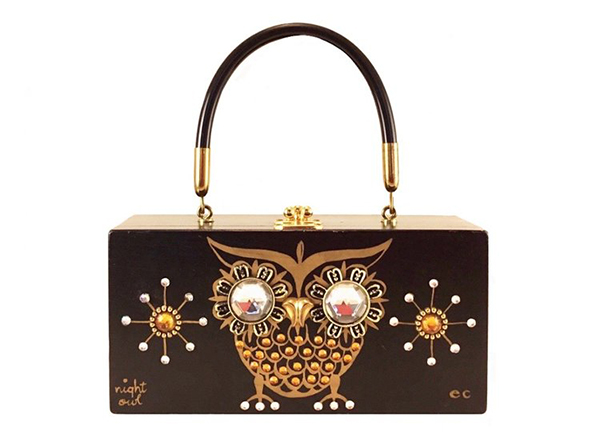
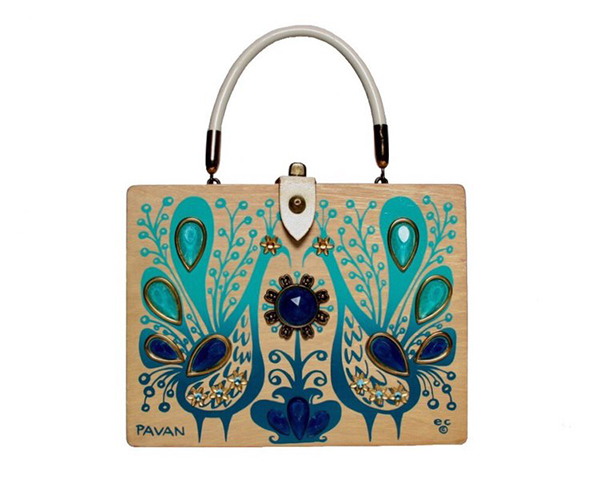
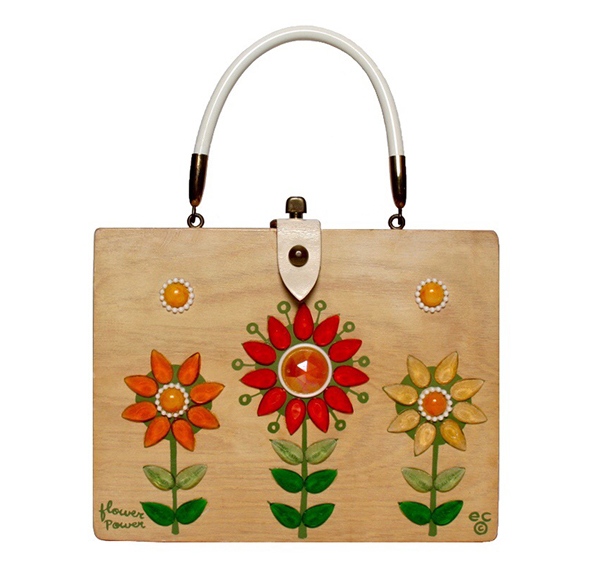
A large number of designs – well over 100, appeared on top of the two types of bags, decorated with contemporary designs: prints, paintings, sparkling stones, sequins and beads.
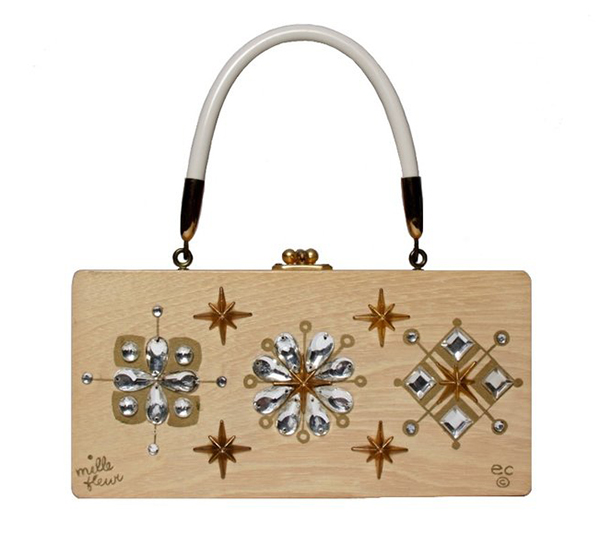
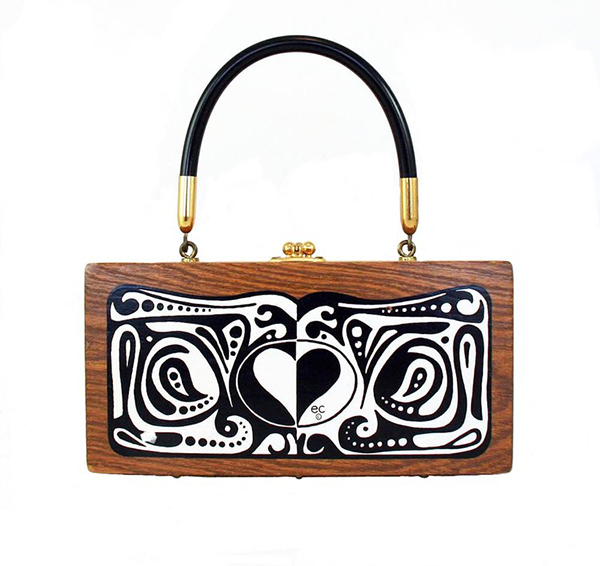
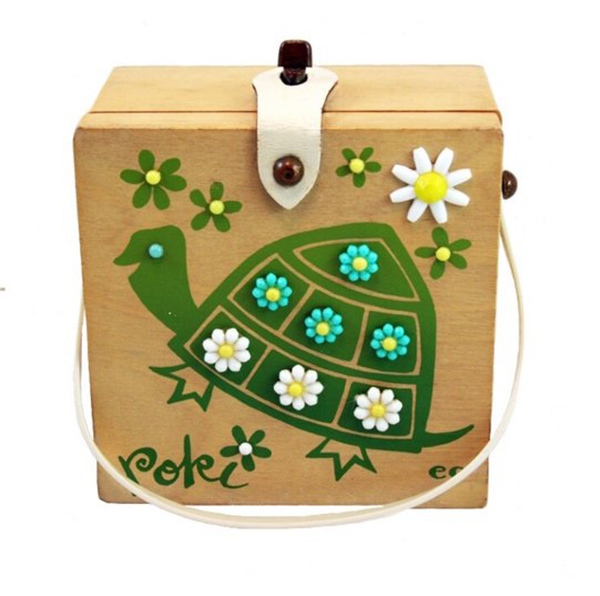
The first bags were produced in 1959, and after a while the production process moved to a real factory. In fact – two factories were needed, as it was impossible to supply the high demand from their home studio. The bags were extremely popular and were available for purchase at most of the largest department stores across the country. It is important to note that despite the visual richness and the detailed decor, these were not considered evening bags, but were intended for daily and casual use.
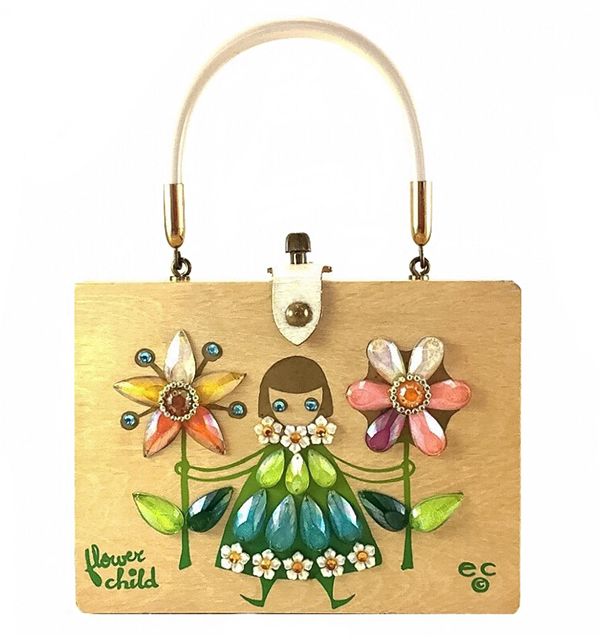
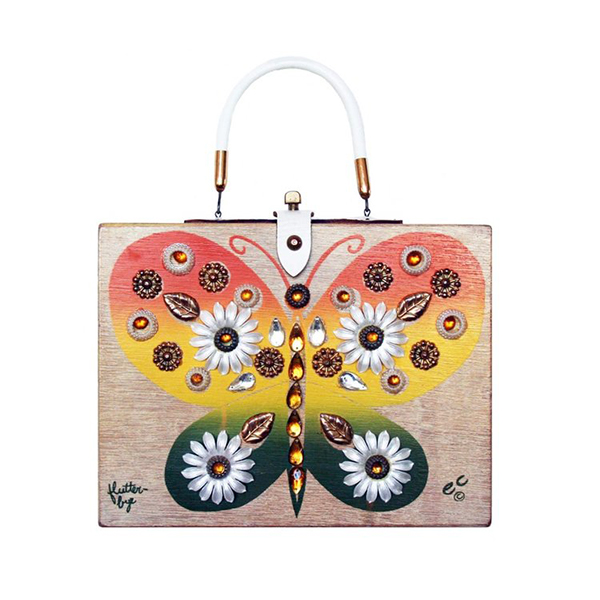
The inspiration for the designs came mainly from the world of nature, and included birds, peacocks, fish, horses, trees, butterflies, owls and flowers, and of course – from farm life in Texas, as well as from the world of cavalry and horses. Seeing as there are more than a hundred different designs – all of these elements were mostly repeated in different variations.
At the height of the bags’ popularity, self-styling D.I.Y kits were also available for purchase, but they are difficult to get hold of today.
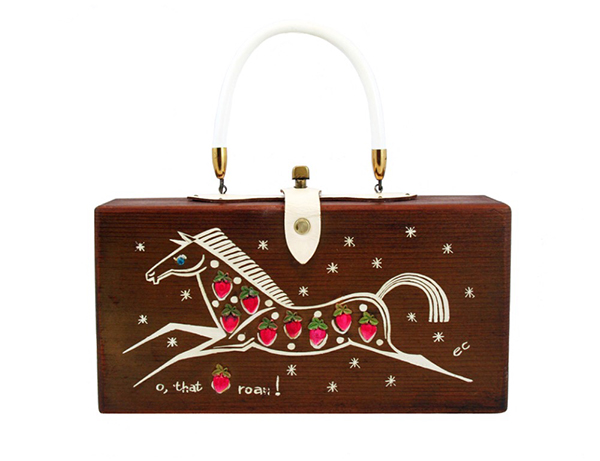
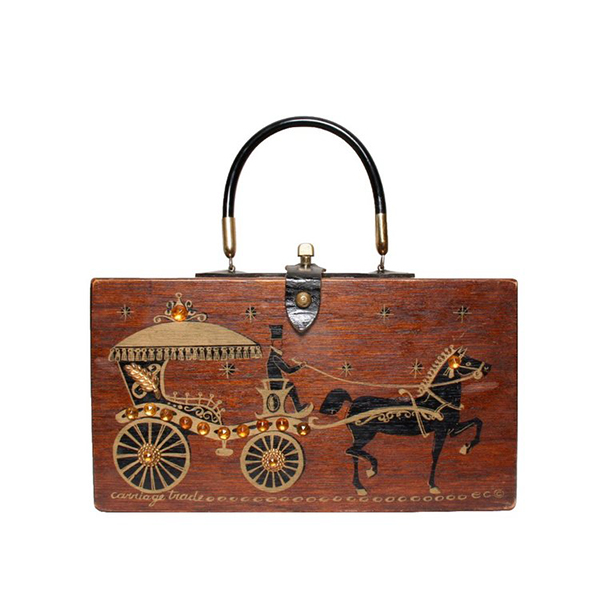
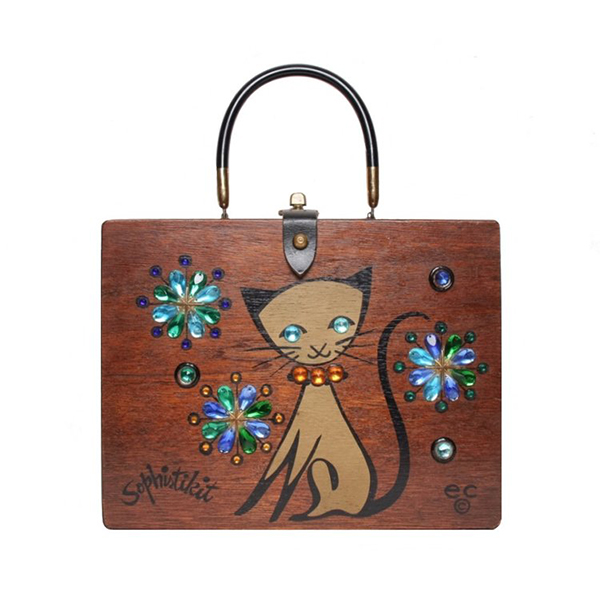
Nowadays, the bags are considered to be expensive and nostalgic collectors items, and of course – there are also knock-offs.
One of the most popular designs, which appears in many colorful versions is the money tree.
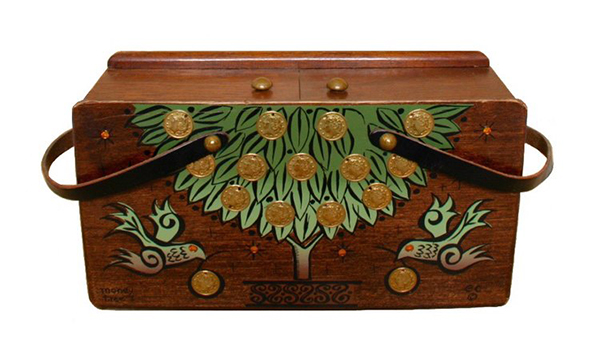
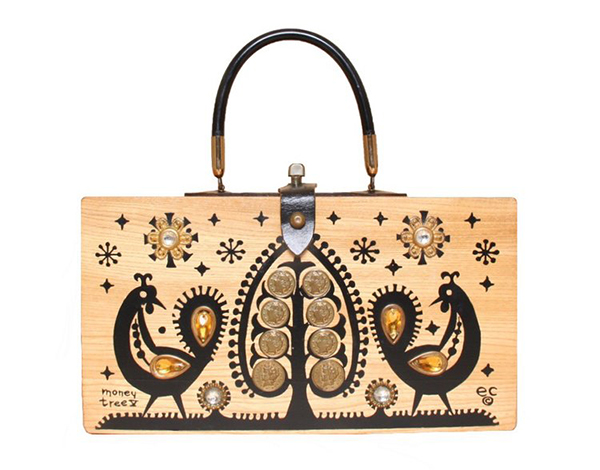
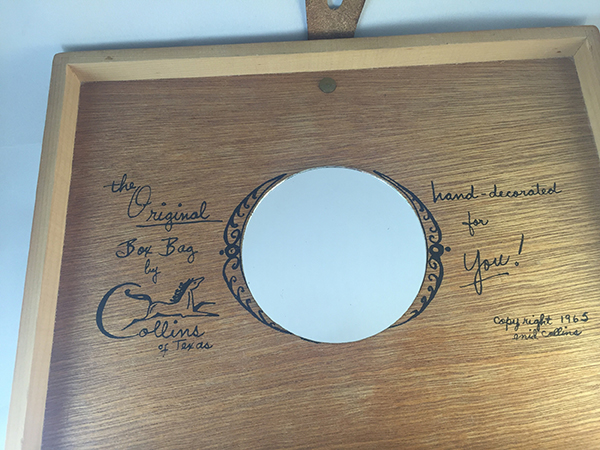
In 1970, Collins sold the company to Tandy Leather Corporation, which continued manufacturing the bags, but changed the logo and signature that appear on them.
Here’s a brief explanation on how to distinguish Collins’ bags from those later produced by the company: the earlier ones were signed with Collins’ full name – usually along with the year’s mark, or simply with a logo, containing the initials “EC” or “C”. The bags produced by Tandy bear the words “Collins of Texas”, or simply a “C” – written in capital letters.
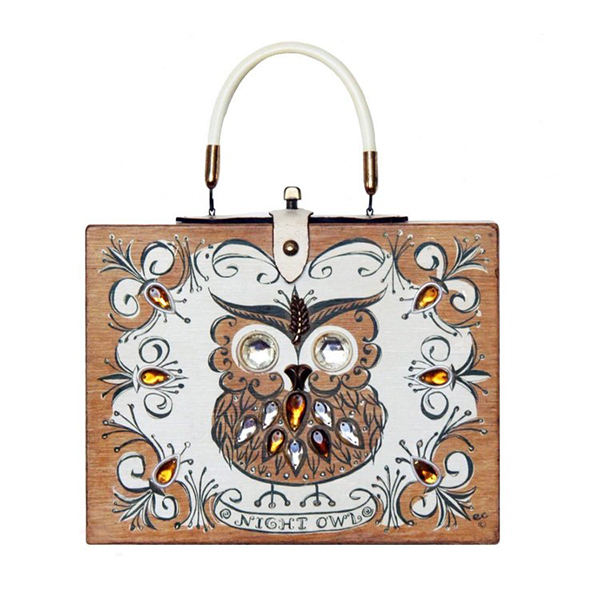
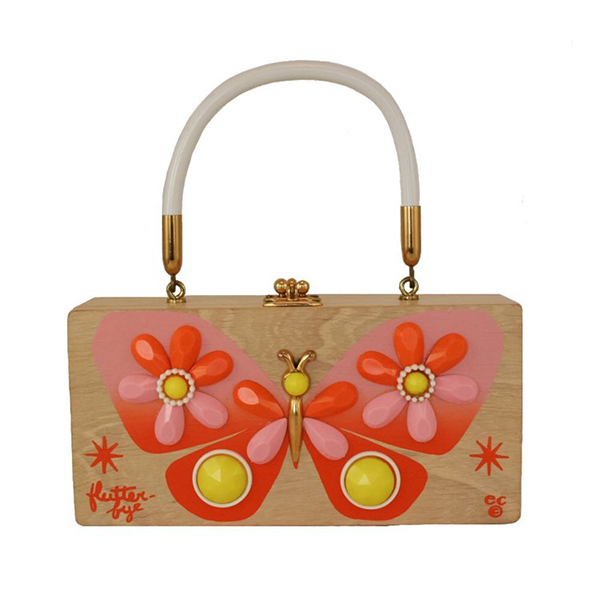
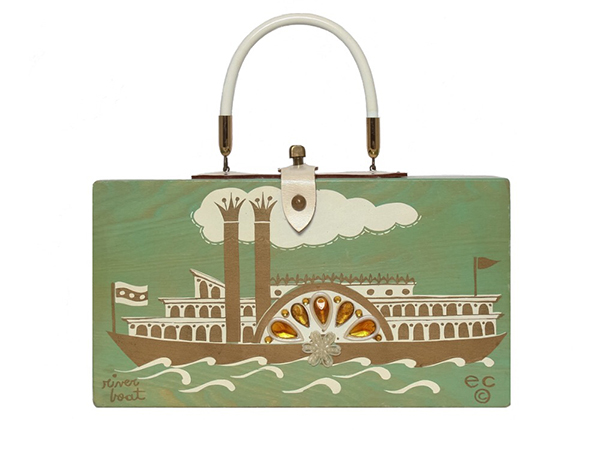
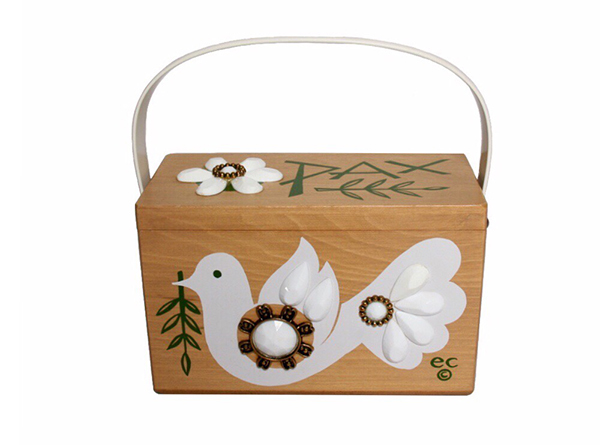
This is what the box cases looked like on the inside: they contained a small mirror, and were inscribed: “hand-decorated for you!”
Enid Collins in her studio
All bag images in this post were taken from this site
I hope you enjoyed this post! I invite you to view my fashion illustrations at my Instagram page.
 Dreams in fabric