Social
media is a relatively new and young
phenomenon, where everything – once published – becomes “yesterday’s
news” after a day or two. For this reason, it is so amazing that
there – of ALL places – it’s possible to
find treasures and receive inspiration
from things that had happened even before we were
born, and that we wouldn’t have come across so easily, otherwise.
I was introduced to Enid Collins’ bags while browsing through the Instagram feed of Victoire de Castellane, the creative director of Dior jewelry. She had uploaded a picture of her collection of Enid Collins bags a few months ago, and I was quite amazed to meet them for the first time.
I
was enchanted by this picture – it
felt like I had found a
treasure, and that I must investigate what lies behind this visual
and nostalgic magnificence, which Victoire
(what a beautiful name) enjoys collecting.
And indeed, I became acquainted with a world of richness and charm –
a time capsule from the sixties and seventies of the last century –
and with a creative and entrepreneurial woman.
After
World War II, Enid Collins and her husband,
Fred, bought a small farm in Texas. She studied
fashion and art while he studied engineering, and sculpted as a
hobby. They were looking for a way to increase their income from the
farm, so Enid began designing bags at home, by her kitchen table,
while Fred helped with the technical work – by designing the
connectors, for example.
The
first bags were made out of very expensive materials – such as
leather, for example, or imported cotton. But Enid quickly came up
with a great idea – wooden box cases, which involved lower cost and
therefor were affordable for more people (canvas bags were added
later on, but in this post I will focus on the box bags only, simply
because they are much more to my liking).
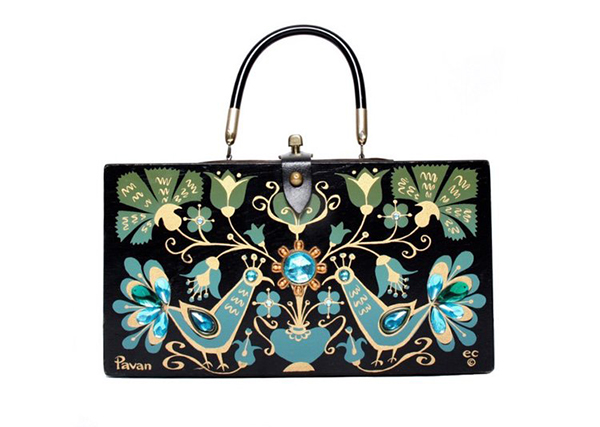
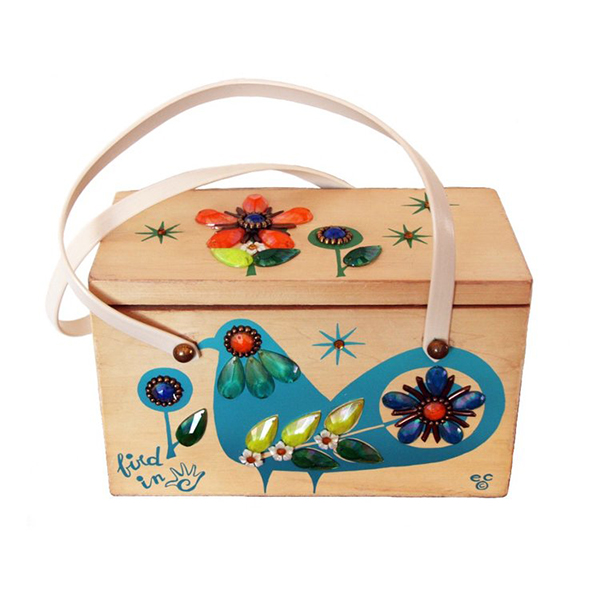
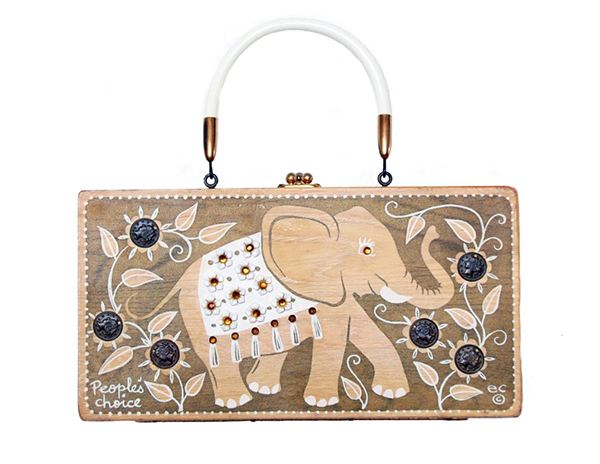
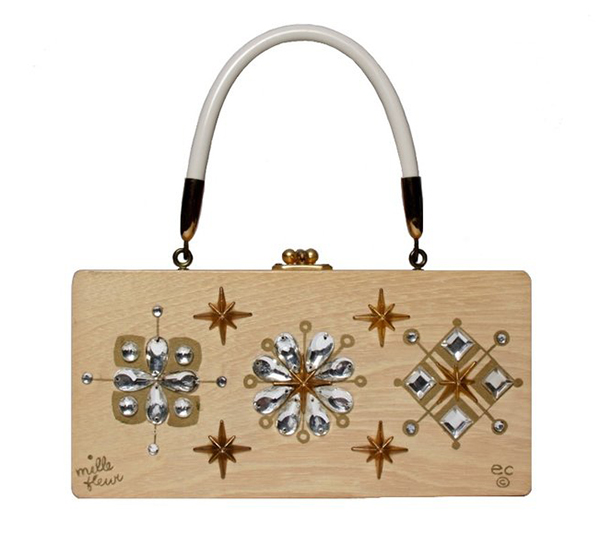
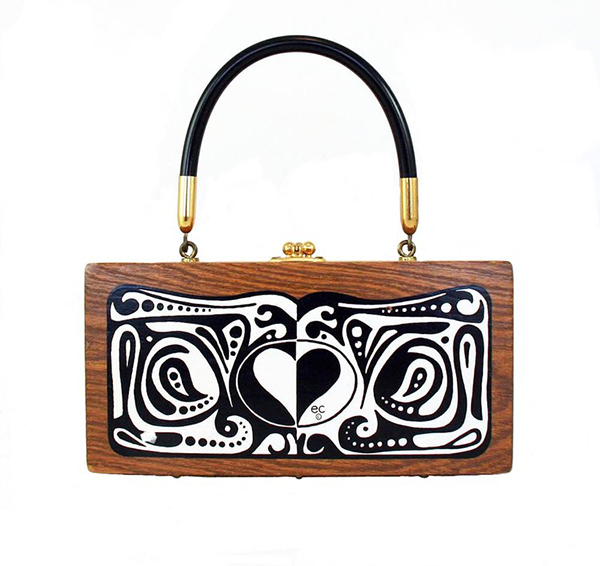
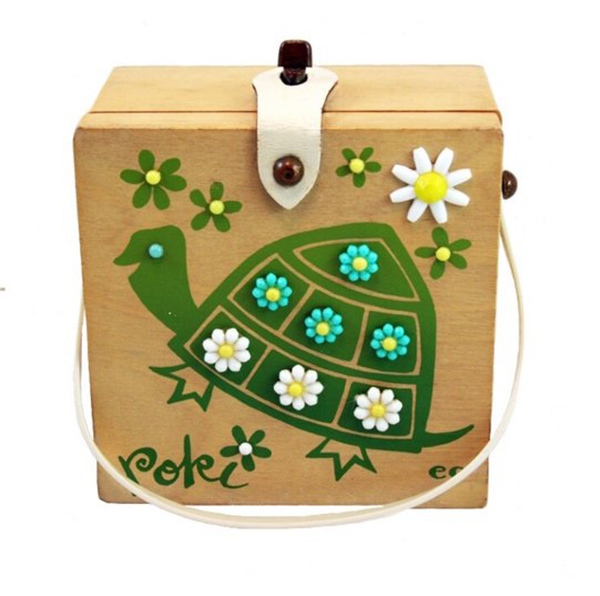
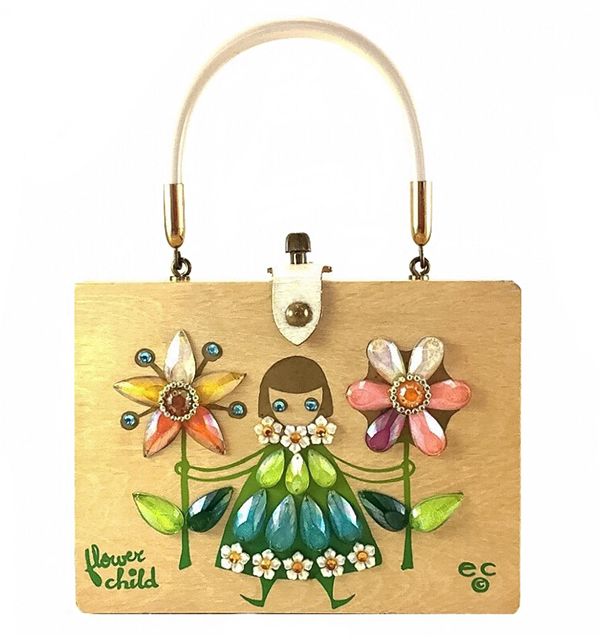
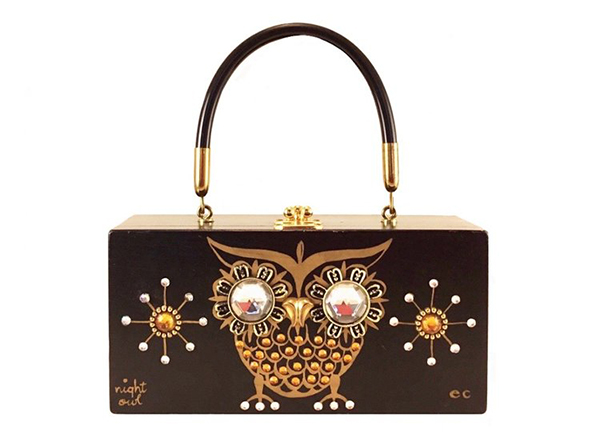
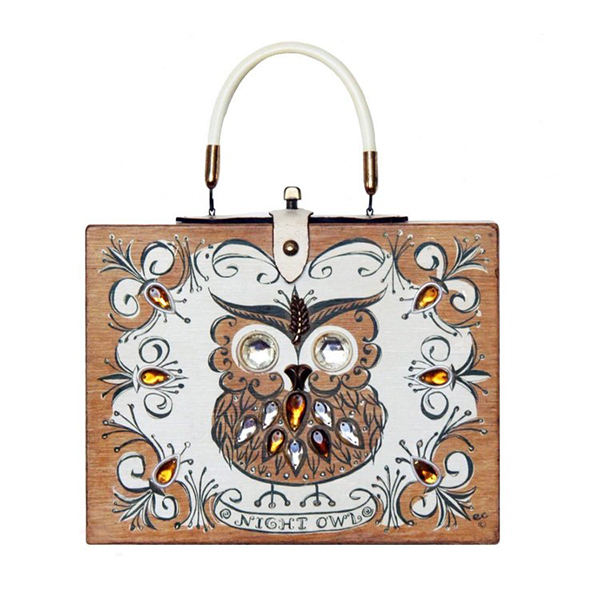
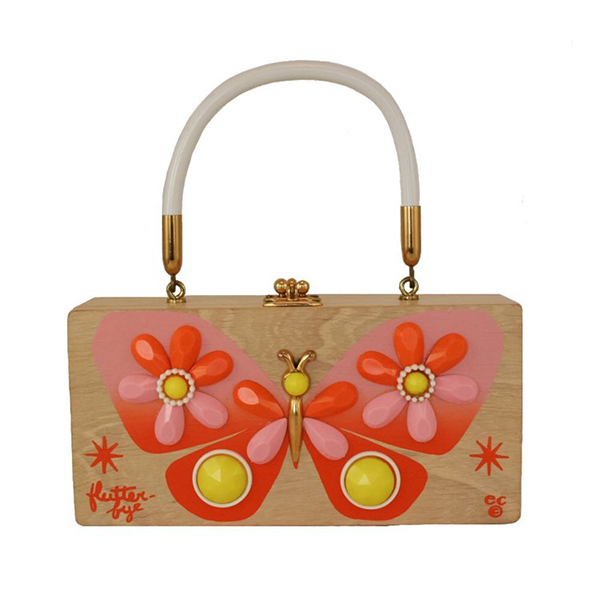
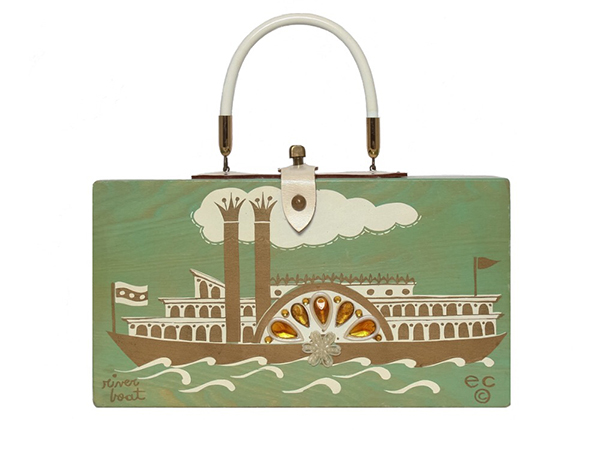
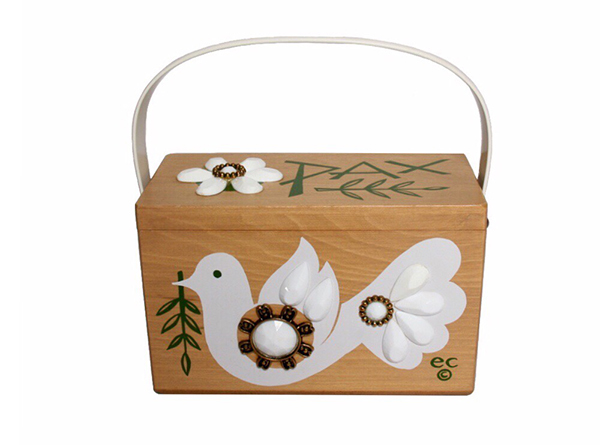
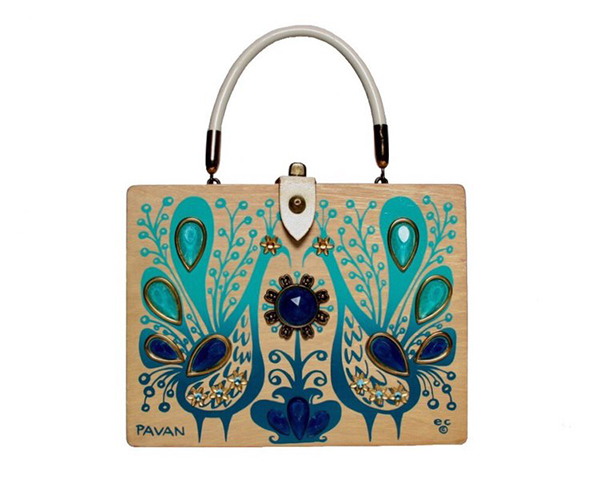
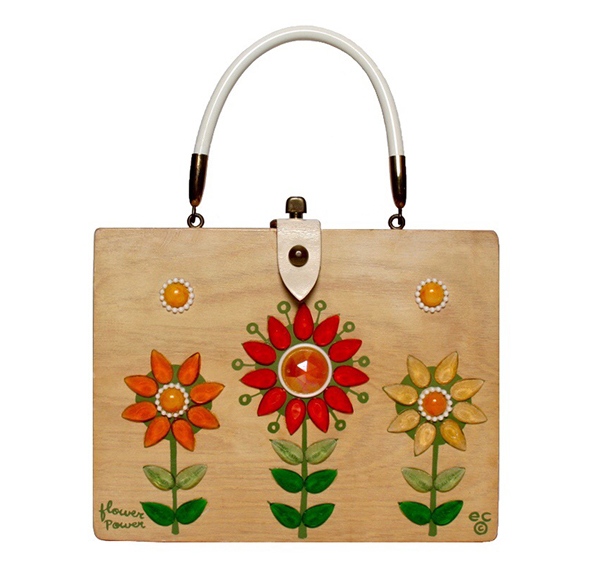
A
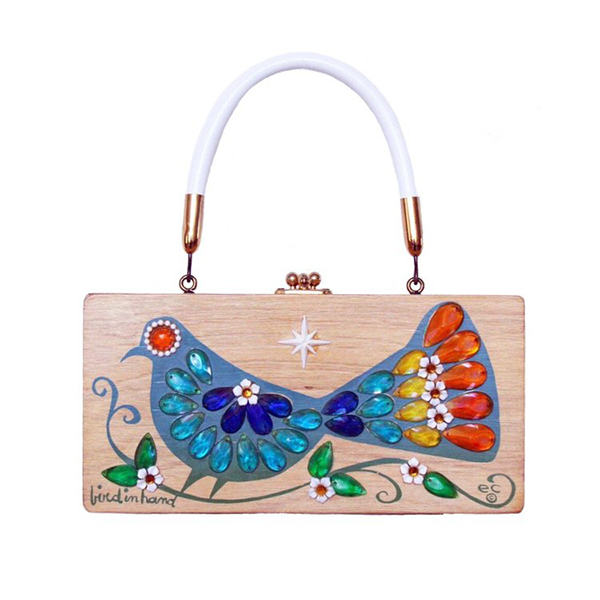
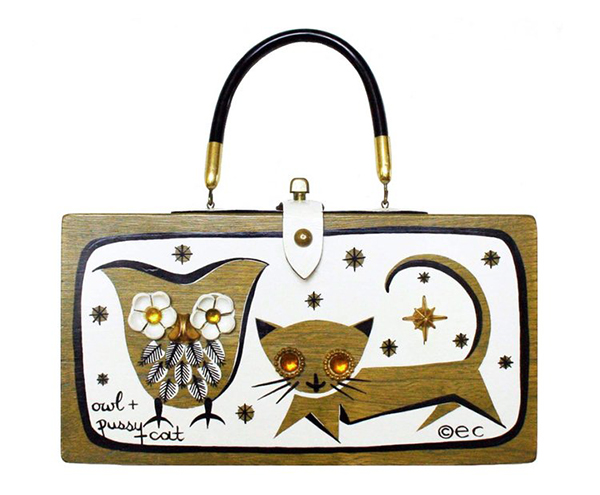
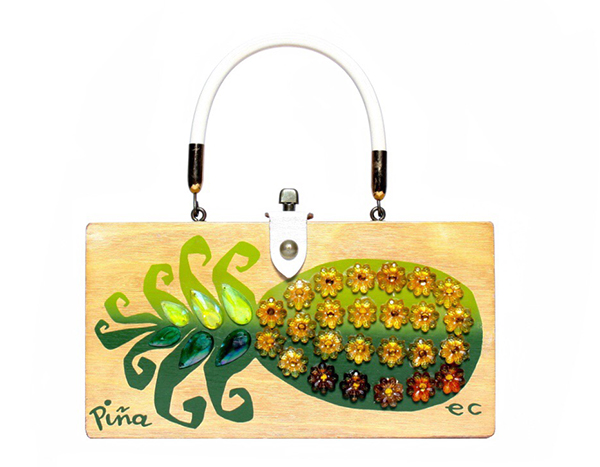
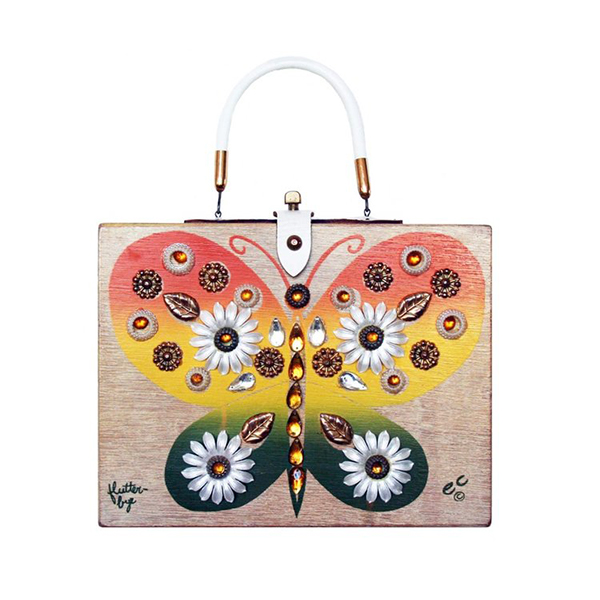
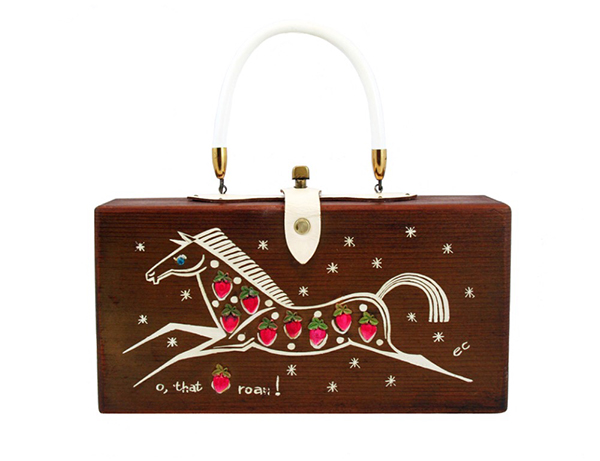
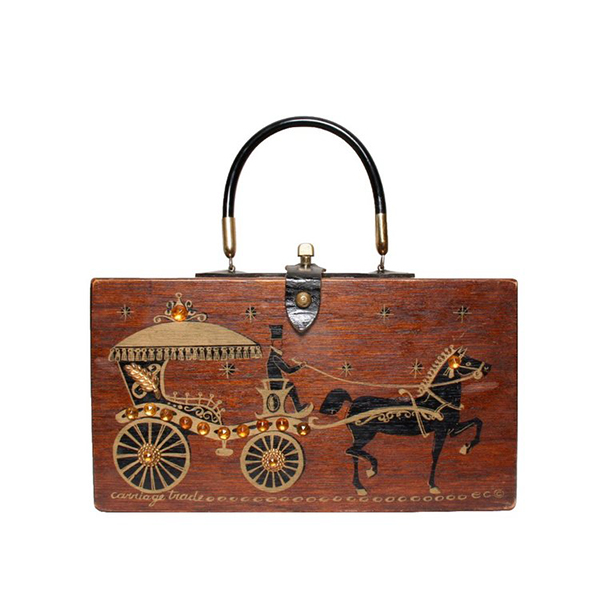
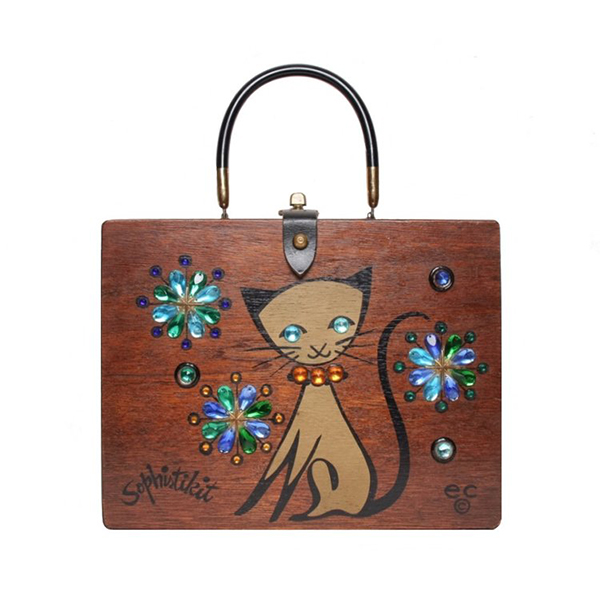
large number of designs – well over 100, appeared on top of the two
types of bags, decorated with contemporary designs: prints,
paintings, sparkling stones, sequins and beads.
The
first bags were produced in 1959, and after a while the production
process moved to a real factory. In fact –
two factories were needed, as it was
impossible to supply the high demand from their home studio. The bags
were extremely popular and were available
for purchase at most of the largest department stores across the
country. It is important to note that despite the visual richness and
the detailed decor, these were not considered evening bags, but were
intended for daily and casual use.
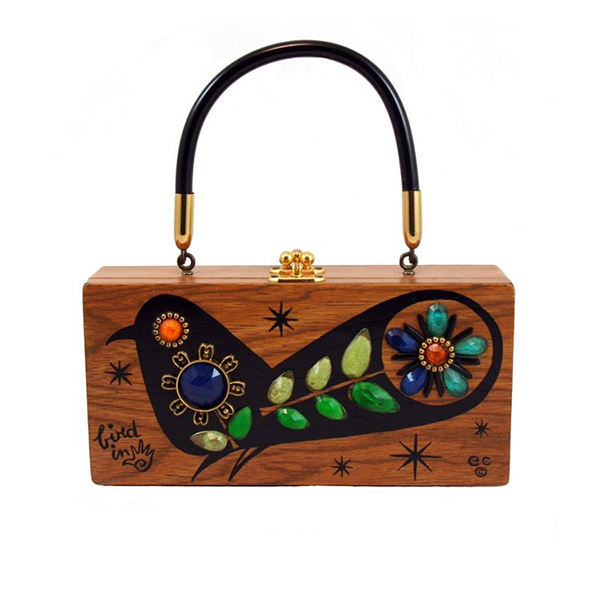
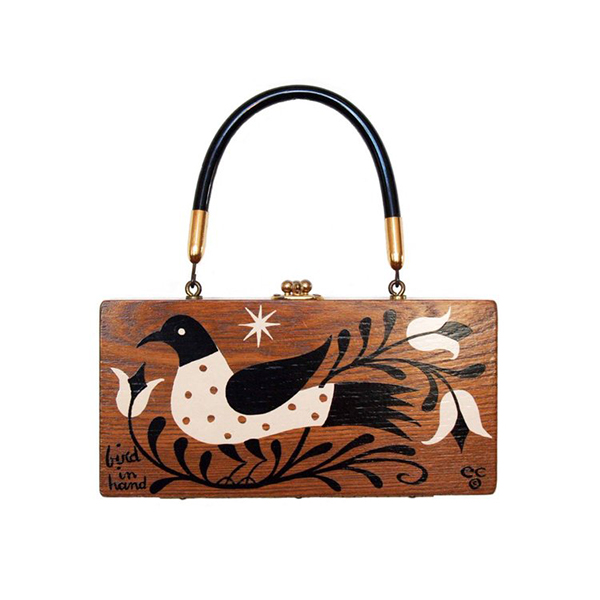
The
inspiration for the designs came mainly from the world of nature, and
included birds, peacocks, fish, horses, trees, butterflies, owls and
flowers, and of course – from farm life in
Texas, as well as from the world of cavalry
and horses. Seeing as there are more than a hundred different designs
– all of these elements were mostly repeated in different
variations.
At
the height of the bags’ popularity, self-styling D.I.Y kits were
also available for purchase, but they are difficult to get hold of
today.
Nowadays,
the bags are considered to be expensive and nostalgic collectors
items, and of course – there are also knock-offs.
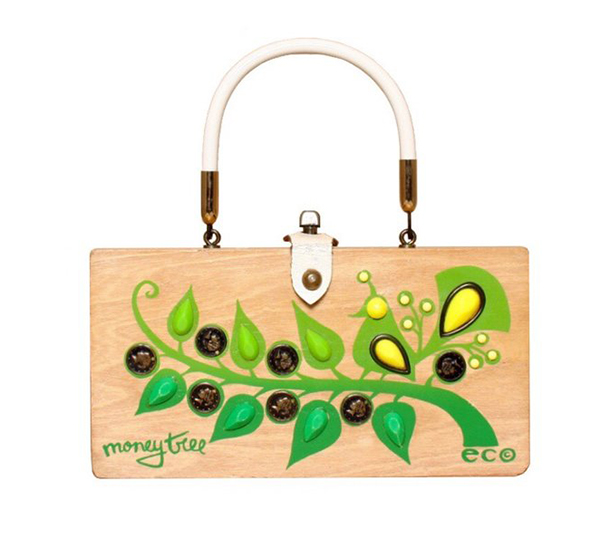
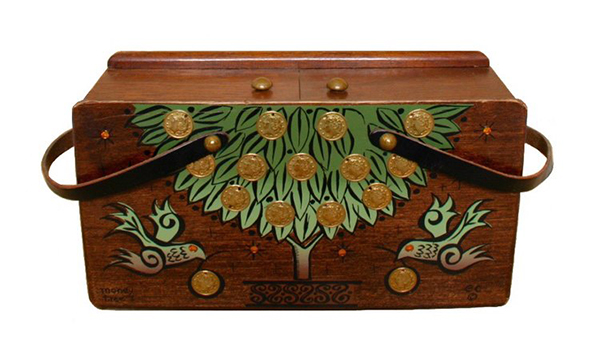
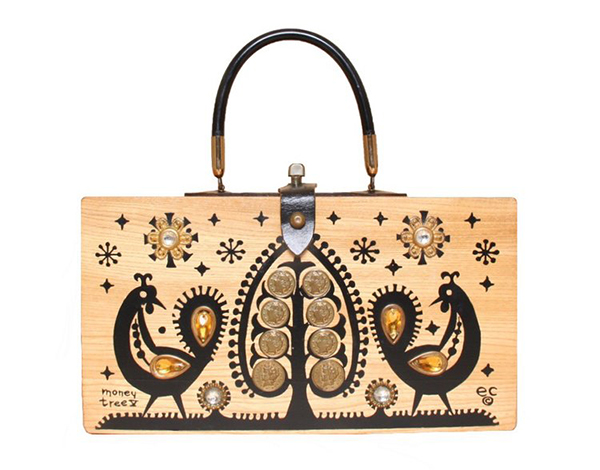
One
of the most popular designs, which appears in many colorful versions
is the money tree.
In
1970, Collins sold the company to Tandy
Leather Corporation, which continued
manufacturing the bags, but changed the logo and signature that
appear on them.
Here’s
a brief explanation on how to distinguish
Collins’ bags from those later produced
by the company: the earlier ones were signed with Collins’ full name
– usually along with the year’s mark, or simply with a logo,
containing the initials “EC” or “C”. The bags produced by
Tandy bear the words “Collins of Texas”,
or simply a “C” – written in
capital letters.
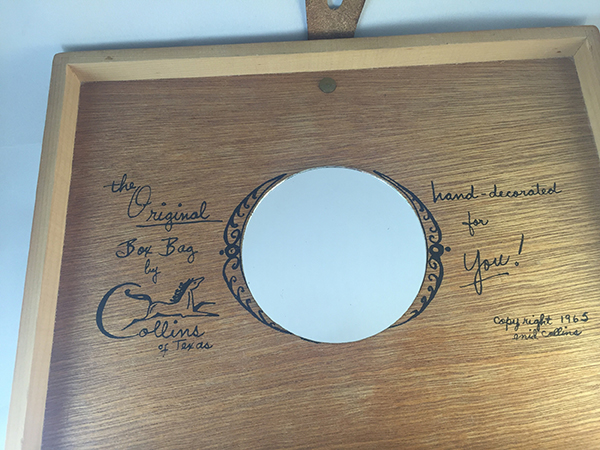
This
is what the box cases looked like on the inside: they contained a
small mirror, and were inscribed: “hand-decorated for you!”
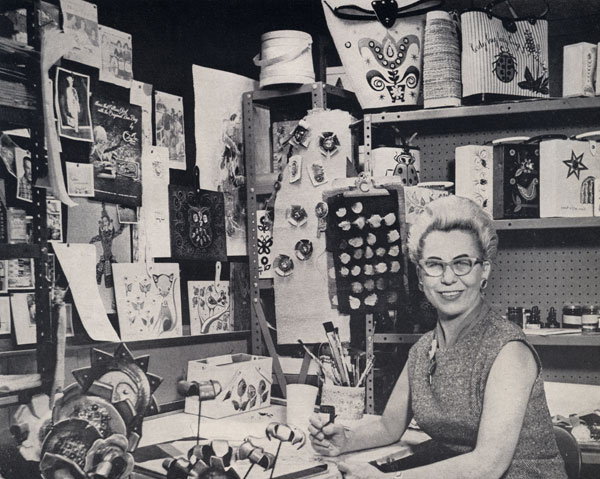
Enid
Collins in her studio
All
bag images in this post were taken from this site
I hope you enjoyed this post! I invite you to view my fashion illustrations at my Instagram page.
I
would like to dedicate this post to a revolutionary American
photographer – Deborah Turbeville.
Her
influence on fashion photography as we know it today has been
so great, at
first glance the innovation she offered might go unnoticed, but back
in the 1970’s, her photographic style
evoked quite the shock, therefore making her contribution to the
world of fashion photography – enormous.
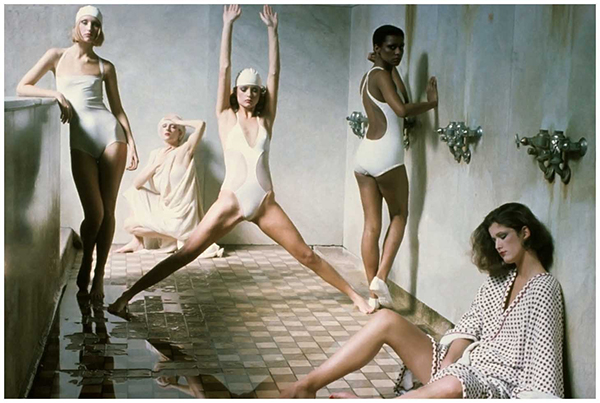
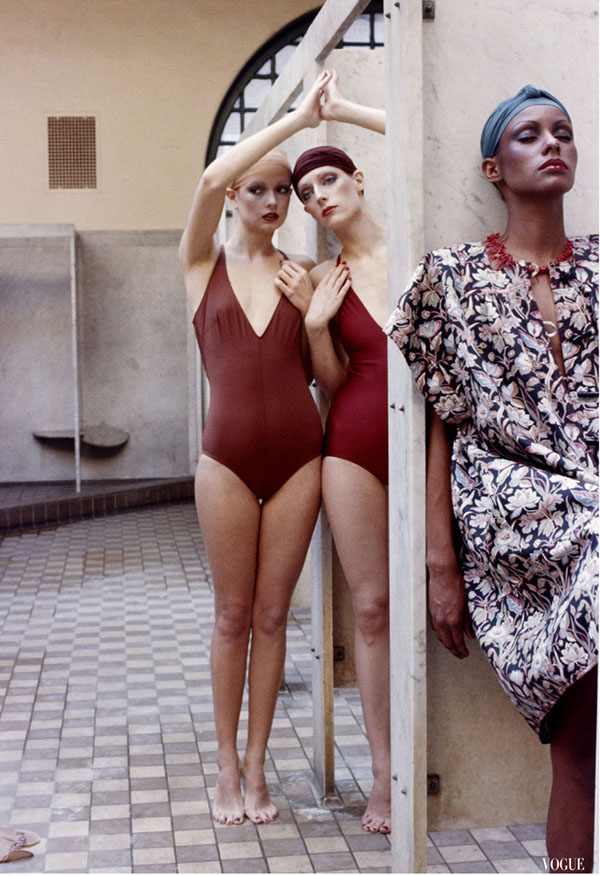
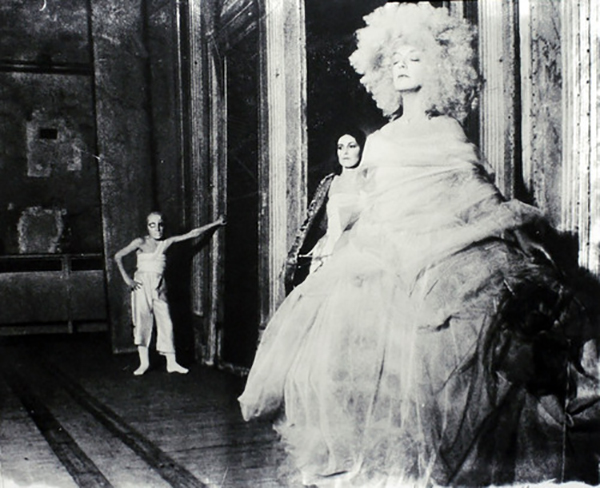
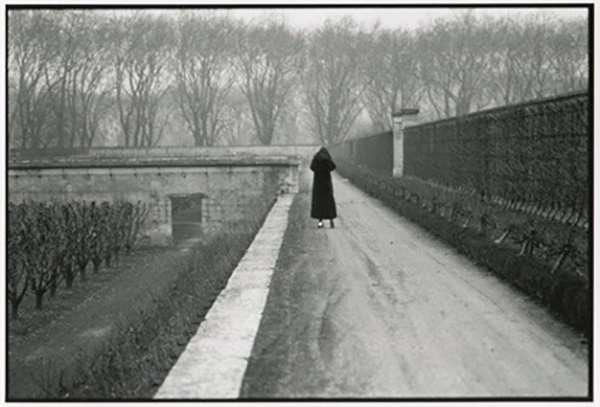
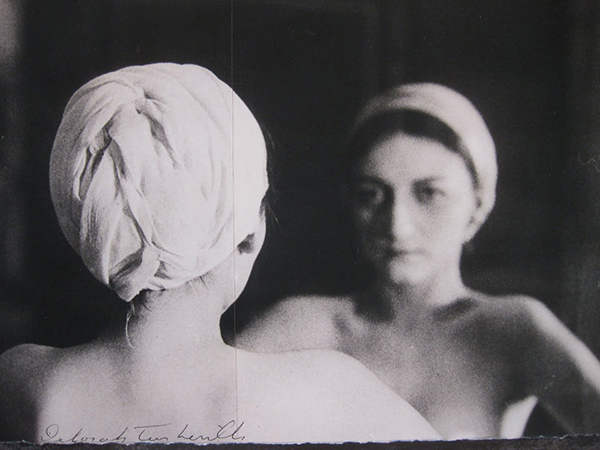
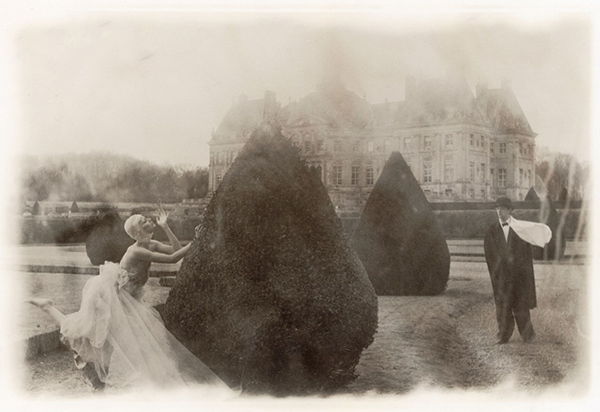
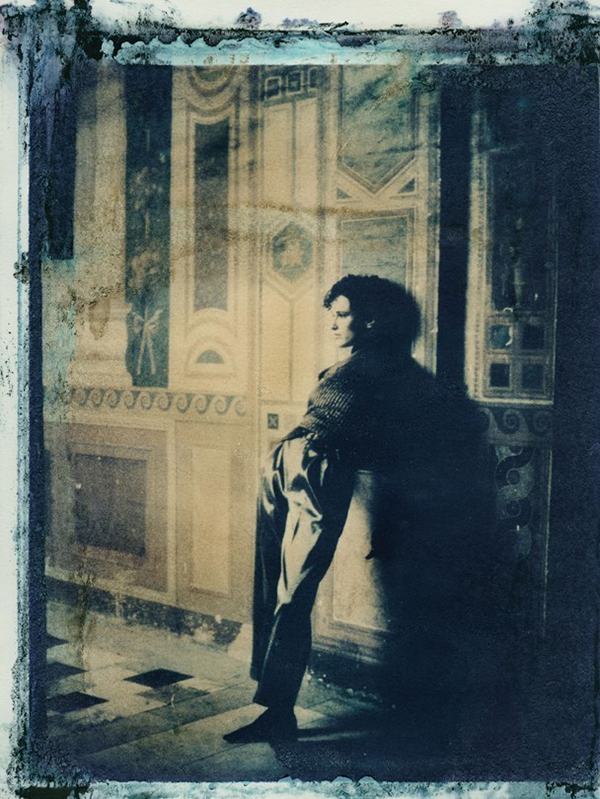
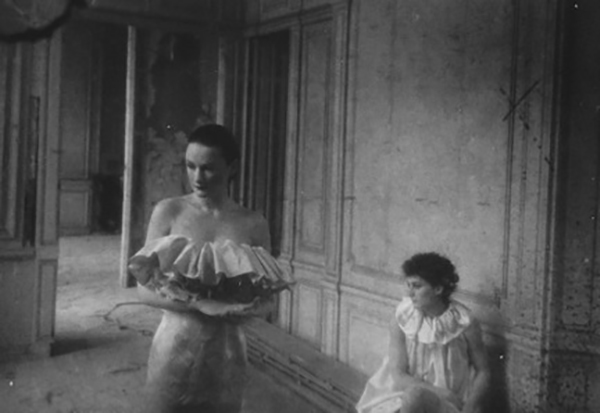
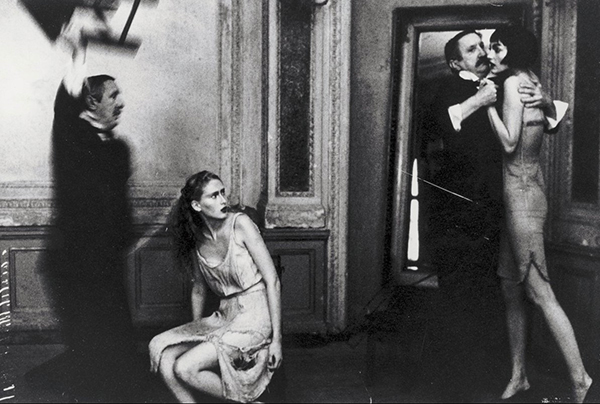
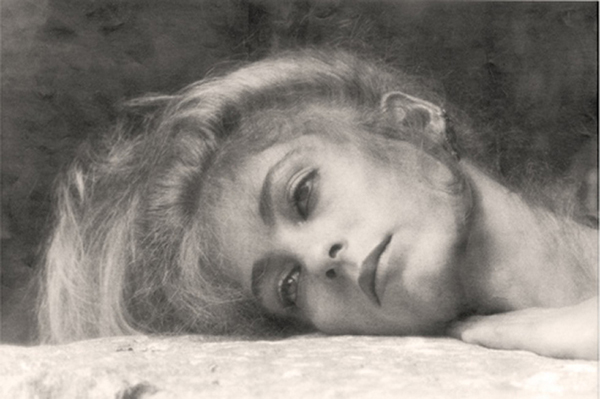
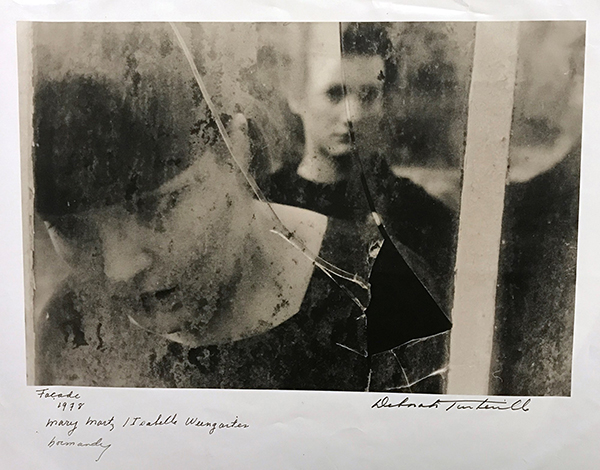
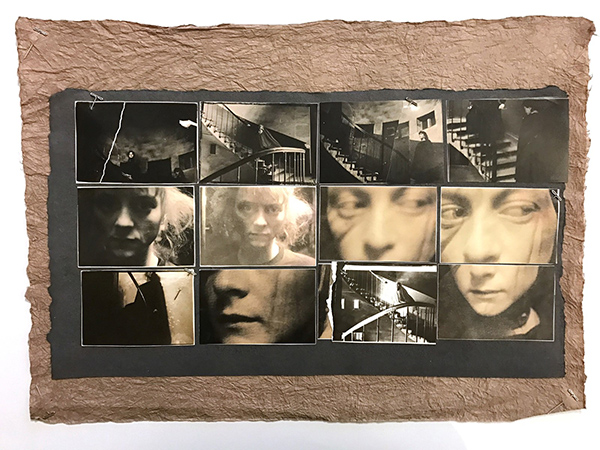
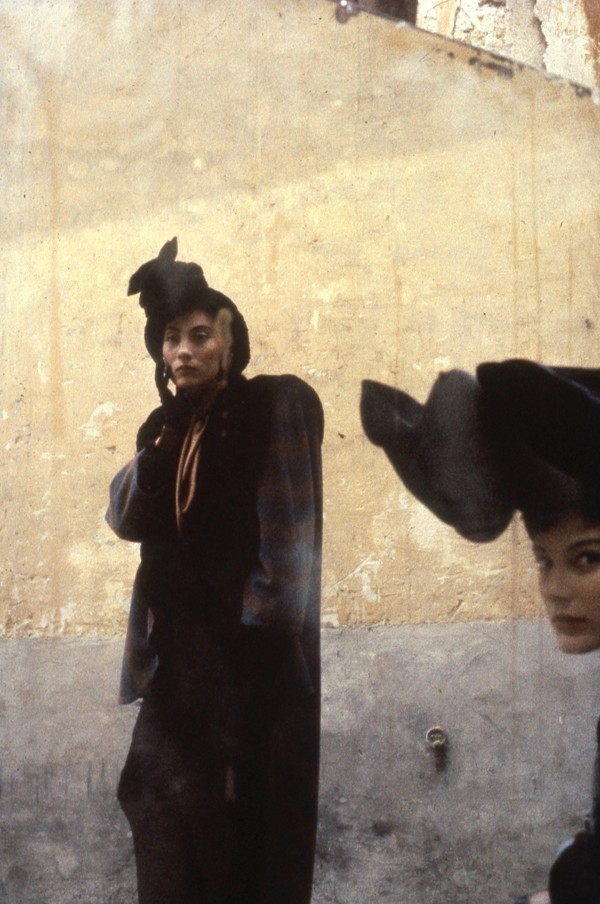
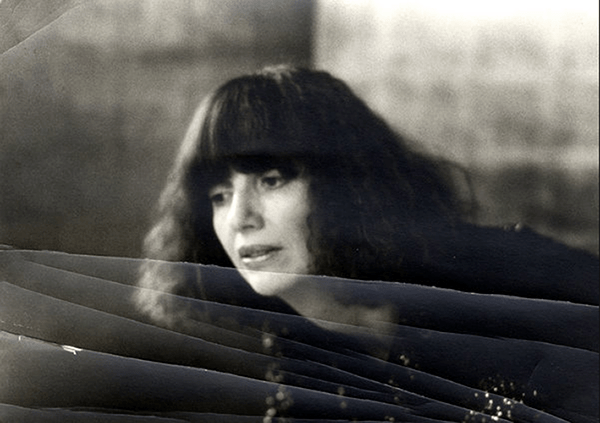
Until the 70’s, fashion photography was clean and bright, while Turbeville’s photographic style – characterized by frozen poses, the blurred, blazing looks of the models, the scratches, the tears, the obscurity, the darkness and the luxurious yet derelict buildings – all of these left the fashion world stunned. The photos, which were mostly black and white, were sometimes scratched and wounded – as if they had been discovered in a dusty attic, and not specially commissioned by a fashion magazine or a prominent fashion designer.
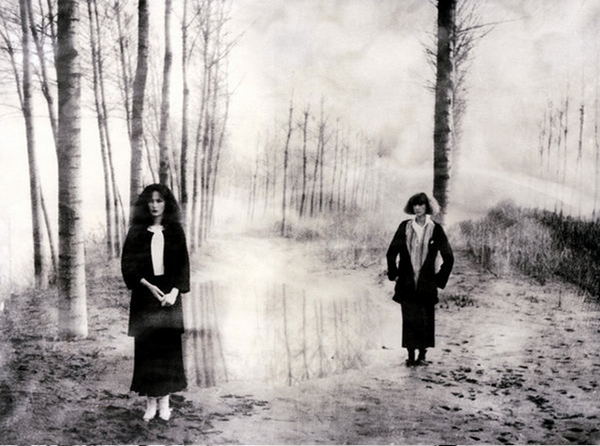
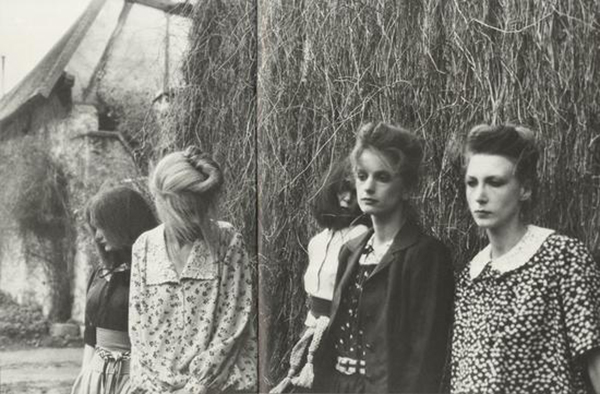
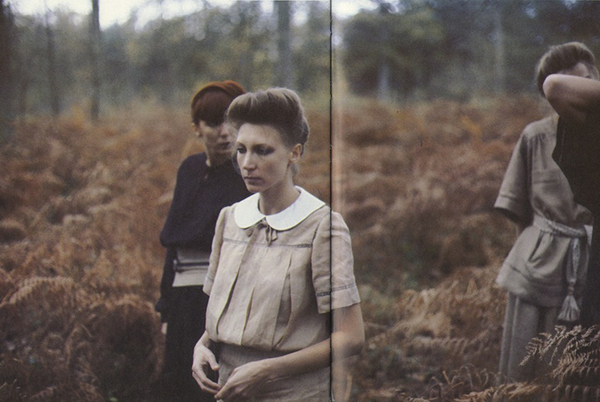
Vogue Jan 1975Women in the Woods: Ella and Isabella, VOGUE Italia, 1978
Turbeville
was born in 1932 in an secluded farm in Massachusetts, growing
up in geographical isolation – with only few friends her own age. She
was greatly influenced by her surroundings and was a dreamy, talented
young girl.
I
came across a story describing a childhood memory of hers: it was
about a family painting she had created as a school assignment, which
her teacher disliked so much – she was expelled
from school for several weeks. This memory kept repeating
over and over again, thus shaping her self-perception, perhaps within
it lies the cause for the distance that
is portrayed through the models’
eyes in her photographs.
Vogue Italia, 1977
She
burst into consciousness as part of a trio of revolutionary fashion
photographers, who worked individually – but
together changed the world of fashion photography from subtle and
calm, to turbulent, dark and even morbid.
Turbeville
was the only American and the only woman in this trio, which included
Helmut Newton and Guy Bourdin. However, she was nicknamed
“anti-Helmut Newton” as her photographs
were a reversal of the urban erotic atmosphere that dominated
Newton’s photographs. Her photographs steered more towards the
mysterious and dreamy direction.
Isabelle Weingarten, Mantova, Italy, 1977
nterestingly, Turbeville began her fashion career
as a fashion editor in popular magazines such as Harper’s
Bazaar and Mademoiselle. It wasn’t till
the mid-1960’s that she began
photographing.
In
the 1970’s, she was already commissioned to shoot for leading
magazines such as Vogue America, Vogue Italia and leading fashion
designers.
One
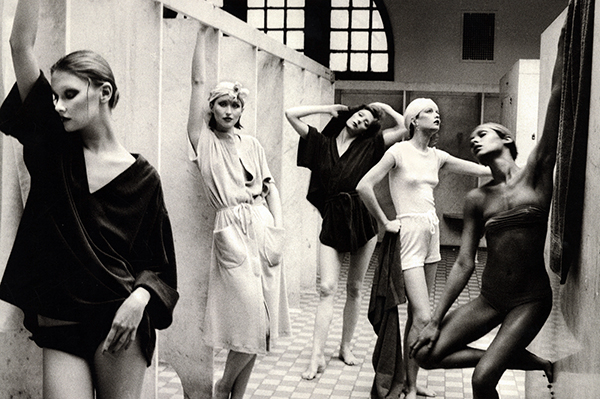
of her most famous and controversial works is “Bath
House story”, a swimsuit editorial
created for American Vogue in 1975.
The
unusual style triggered comparisons and references to concentration
camps, drug addicts and lesbian relations, and though today I think
they may not have received any criticism, at the time they were
published they generated an enormous
amount of criticism and – of course – an
equal amount of publicity and sales.
Turbeville
argued this was not her intention, denied any connection to these
comparisons and claimed that her artistic motives were different. She
created a similar series about ten years later.
It
was Turbeville’s impression that “Bath
House story” was the most controversial
publication the magazine had published until that time, and
has also become one of her most identified works.
“I
like to hear a clock ticking in my pictures”
– she once said, and perhaps these words best suit this grandiose,
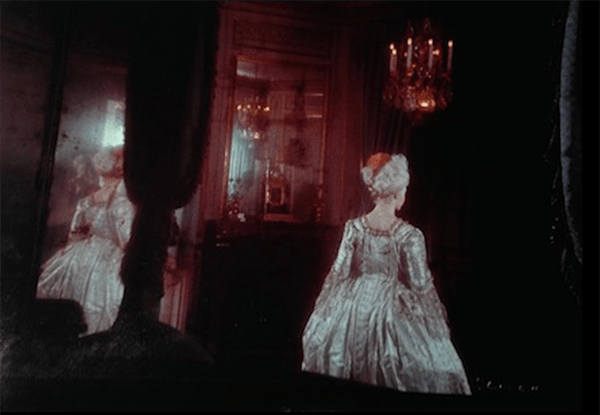
poetic, and spectacular project – “Unseen
Versailles”: a prize-winning book
published in 1982.
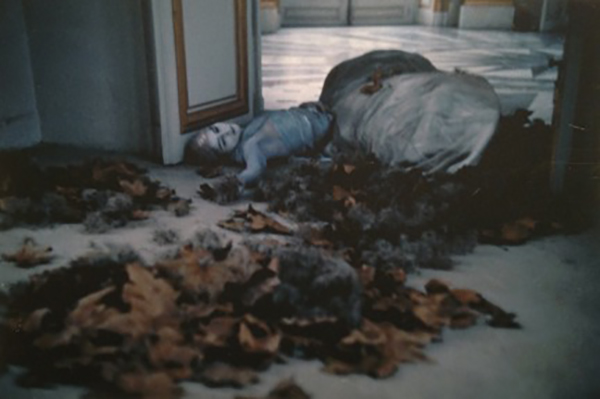
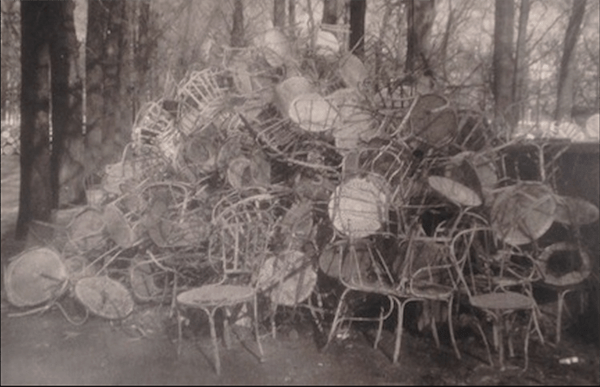
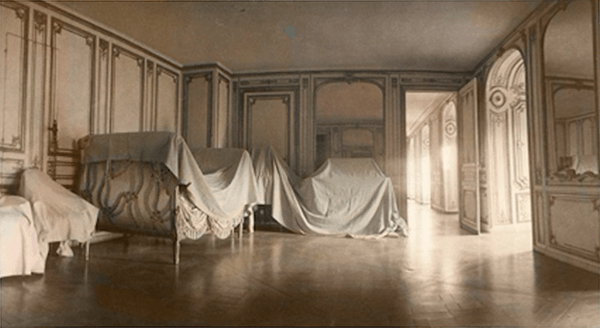
She
worked on this book for two years, taking pictures of the hidden side
of the Versailles Palace – the familiar
palace, as no one had ever seen it before. She resurrected the
melancholic court ladies and documented the sadness and boredom they
were surrounded by, along with the aging
glory of the buildings and gardens during the different seasons. This
book, filled with melancholic beauty, won first place in the American
Book Award.
“I wanted to create photographs that were outside time, of people in today’s world with the atmosphere of the past reflecting upon their faces, of palaces and gardens that were abandoned and are overgrown. Photographs that retain a history.”
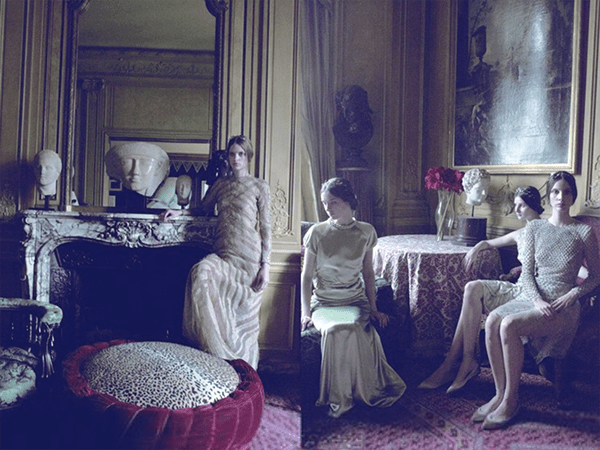
Rosima in Comme des Garçons at Vaux le Vicomte, for Parco, France, 1985 Models in Valentino, VOGUE Italia, 2011
Franca Sozzani, the legendary editor of Vogue Italy, said that in Turbeville’s pictures “every detail is perfect and wrong at the same time.”
Romeo Gigli, Mirabella, 1989
An
excerpt from an article about her and a visit to her apartment in New
York, which is located in a beautiful, old building:
“Turbeville’s
building is uncomfortable in the here and now. And so is Turbeville,
who has made an illustrious career out of creating images of
forgotten grandeur that is sadly faced with the vulgarity of the age
it was never meant to witness.”
The Silent Collection, Musee Picasso, Paris, 1980W Magazine, Cantor Theater, Poland, 1997
And
Turbeville attests herself –
“I
always think I’m having a romance with
the past. But I’m actually explaining the
past in the present.”
Victoria Guiness, Vogue Italy, 1983Women In The Woods, Normandy, VOGUE Italia, 1978Untitled, 1978 “Glass House”Comme des Garçons, Passage Vivienne, Paris, 1980Ungaro, Vogue, 1984
After
her death in 2013, the New York Times reported:
“Almost
single-handedly turned fashion photography from a clean, well-lighted
thing into something dark, brooding and suffused with sensual
strangeness.”
Stylist and Muse to young Israeli Fashion Designers. Married and mother of five, resides in Giv’at Shmuel
“Style is a language that speaks before a single word is said”
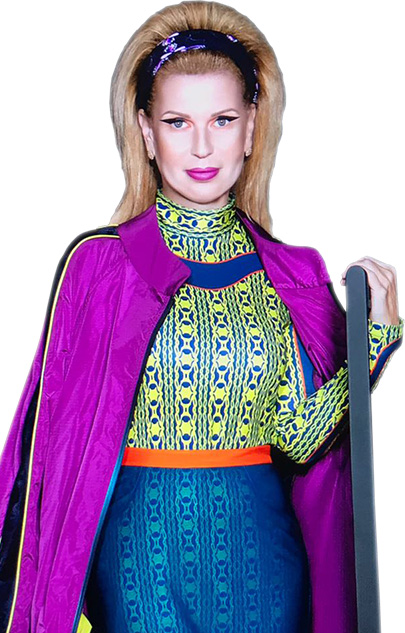
Beautiful Vardit, with her carefully styled hair and her unique and daring clothes, evokes a sense of astonishment and appreciation in me, and brings a smile to my face every time I see her – both in pictures and in real life. We met for the first time this year, shortly after I had read about her in Israeli fashion magazines, which left me quite intrigued – particularly due to her being referred to as “The Shenkar (Shenkar College of Engineering, Design and Art, commonly known as ‘Shenkar’) students’ Muse” (Vardit acted as a Muse to Shenkar Design students during a course about International Fashion Houses, taught by Ronen Levin, at the end of which – each student created a unique item of clothing especially for her). Add to this winning recipe her pleasant and empowering demeanor, and you’ll understand why the first post in my new blog – about inspiring women and treasures from their wardrobe – is dedicated to her.
Vardit in a picture from the Elisha Abargel catalog. Photography: Miri Davidovitz, Styling: Oren Dar
Vardit lectures and conducts workshops about styling for women, in addition to holding a long-lasting (27 years!) position as an Executive Assistant at Yedioth Ahronoth (Israel’s most widely-read daily newspaper). Over the past few years, she returned to lecturing and conducting workshops for women focusing on styling in the age of Opulence, and about clothes in the age of Fast Fashion – subjects this blog will continue to discuss in detail.
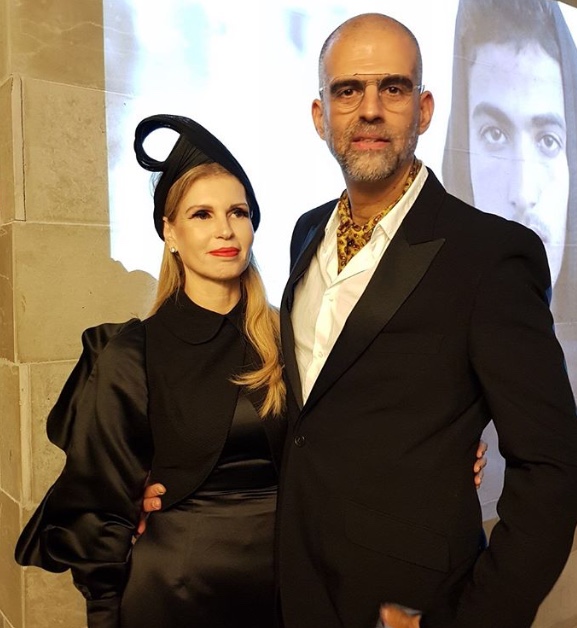
In my eyes, Vardit is a Muse not only because of her unique style, but also due to her supportive attitude towards young Israeli Designers. Her support is shown by her attendance at Shankar’s graduates final collection fashion shows and at Tel Aviv Fashion Week shows, and by regularly purchasing and wearing items they designed.
Vardit walking down the runway at a Shahar Avnet show during Tel Aviv Fashion Week
And here’s my illustration! I illustrated Vardit as soon as I got home that day from the Fashion week compound, still inspired by the wonderful and energetic Shahar Avnet Fashion Show. Want to see more of my fashion illustrations? Gladly. Click here to view my Instagram page
This year, Vardit walked down the runways of Tel Aviv Fashion Week at shows by Anya Fleet and Shahar Avnet – two young designers she has strongly believed in from their first steps in the design world, and has an amicable relationship with. Vardit also modeled for designers Elisha Abergel and Maor Zabar – a photo from Abergel’s breathtaking catalog, photographed by Miri Davidovitz and styled by Oren Dar, actuallyopens this post.
I asked Vardit some questions regarding her personal wardrobe, memories and thoughts that relate to garments, fashion and style:
Your first Fashion memory?
A brown, two-piece Safari suit that I wore to my Bat Mitzvah. My mother was definitely ahead of her time by a few decades, but I was an easy child and was happy to humor her. For years later I avoided wearing anything brown (must have been some sort of PTSD…), only introducing the color back into my life in recent years.
What is your dream item (that you still don’t own) – current or from any period in history?
I can’t think of anything specific that answers this definition. However, I can tell you that I’ve yet to find a basic item – such as a denim jacket – that answers all my requirements: has a tailored fit, is made of a material that isn’t too thick and is reasonably priced.
“Two years ago I acted as a “Muse” for Shenkar design students, as part of a course about International Fashion Houses. A creative and unique year, at the end of which each student created a garment for me. Together we went through a special, fulfilling and exciting process”.
You’re very supportive of young, talented Israeli designers. Can you tell us about it and show us an item that has a special meaning for you?
Most of my wardrobe has a special meaning to me, and as someone who pays close attention to detail and treats clothes like works of art – it’s hard for me to choose one specific item. And still: a single sleeved dress with an accentuated shoulder, made from suiting material – part of Tamar Netanely’s Shenkar Graduate’s collection – is a dress in which I see art before anything else, due to its creativity and its high standard of finish. Also, I know how much thought and attention were invested in its creation, which makes it even more special – in my eyes.
Tamar Netanely dress, Photography: Tom Marshak
The same dress, after it was fitted for Vardit – without the embellishment in the front
Another, more casual dress is a pink midi-length dress by designer Elisha Abergel. I like the special fabric, the color that always adds liveliness, the fact that it can be used both day and night – and that it feels so delightful on your body. I use it in the summer as a dress, sometimes even adding different colored trousers from the same fabric, and during the winter I add a thin turtleneck. It’s special to me because I have a personal relationship with Elisha, and I love and appreciate his work. He’s true to his dreams and I truly respect the fact that he doesn’t compromise on the result.
Vardit wearing a dress by designer Elisha Abergel, in his studioThe same dress as featured in Abergel’s beautiful catalog – staring Vardit. Photography: Miri Davidovitz, Styling: Oren Dar
Favorite international or local fashion designer, and why?
Every time I go abroad I seek out local designers. During a visit in Kiev, I met several talented and creative designers and encountered unique, high standard fashion. One of these designers is Yana Chervinska, a talented young woman who knits amazing woolen dresses. I was truly excited by her work – which isn’t really suitable for the Israeli climate, but I couldn’t resist the urge so I purchased two of her dresses, both of which always make me feel special.
A dress designed by Yana Chervinska
The most sentimental item in your wardrobe?
Although my sentiment towards my wardrobe is “they were all my sons” – I choose my wedding dress, designed by Pnina Tornai. It holds a different sentimental value for me, which represents pleasant feelings and a memory from an exciting period.
“I see a direct connection between styling to confidence and empowerment. I know every woman can maximize her advantages in order to feel and look good, and you don’t have to be thin, tall and rich to do it right”
Your biggest Fashion Icon?
On a national level, the late Ronit Elkabetz is an iconic example of style, courage, openness to fashion, creativity and precise selection of garments.
Vardit and Ronen Levin at the opening of the Ronit Elkabetz exhibition at the Holon Museum of Design
On a more personal level, I choose Ronen Levin – senior lecturer at the Fashion Design Faculty in Shenkar, who is a friend and mentor to me. Who knows, loves and appreciates fashion. Ronen speaks and breaths fashion, and he’s the one who taught me that “if it’s good – it’s never too much”. His fashion choices are always a combination of classy and sporty, old and new, elegance and individuality – all done with thought, attention to detail and zero effort.
Tell me more about the choice in you to be a Muse and inspiration for students
The idea in the core of the “Muse” project was to demonstrate to the students the pressure that weighs on each process of inspiration – a customer, for at the end of the design process awaits an actual woman. It’s important to me that women understand we’re all human, and Ronen’s choice of me as a “Muse” is exactly because my life is paved with dreams, copings, goals and choices. All in addition to openness to fashion and creativity.
I grew up in a secular home and from the age of 27, when I married a religious man, I’ve kept a religious lifestyle. That also has an effect on my fashion choices.
For years I battled with being overweight, and even then I didn’t cut myself any slack as far as my outfits were concerned, I was creative and stunning in times when the supply i the stores was very limited. I never let my weight manage me and always took pride in being well-dressed, to suit my size.
Fashion has always been a means of self expression, femininity, empowerment. I believe styling has kept me safe over the years, and still does.”
Best item you’ve ever purchased and why?
A black Boho dress by Liora Taragan. Always appropriate, has a pleasant feel, made of a perfect fabric, suitable for mornings paired with sandals and evenings – paired with high heels. Flattering even though it has a lot of fabric and is really super comfortable.
Is there an item you’d like to wear but you don’t dare?
-No, there’s no such thing.
Which Fashion Week would you rather visit? Paris, New York, Milan, London? Tel Aviv? Somewhere else? Why?
Milan and London are destination cities I prefer to stroll in. I’d never replace the Tel Avivian vibe – with our talented local designers. The atmosphere, attention to detail and the feeling of “being home” and “our own”, as far as I’m concerned – that tops anything else.
One of Vardit’s looks from last year’s Fashion Week. The dress is from Gamla Boutique, The earrings are by Paula Bianco, and notice the headband by Russian designer Iva Ksenevich, Not pictured – the sneakers 🙂
Do you have any special second hand/vintage items? What’s your view on such items?
Vera Wang bridal shoes which I purchased online. As someone who publicly speaks about styling in the age of fast fashion, I think there is a place of honor for quality vintage fashion.
“The shelf life of quality items is longer, so eventually – the purchase is smarter and more cost effective”
How do you choose your daily outfit? What guides you? What item do you usually begin with when assembling your outfit?
First and foremost – according to my tasks for that day. If a long day is planned – I’ll wear an outfit that can be upgraded, and carry various accessories along with me. As someone who believes our clothing affect us – I find great importance in choosing colors according to my mood. I keep close attention to maintaining a wardrobe that’s based on comfortable, flattering clothes that have a twist in their silhouette, fabric and the additions.
Vardit and Ronen Levin, who also invited her to be a Muse for his Shankar students. The event – Shenkar’s end of year Fashion show. Vardit is wearing an outfit by Shahar Avnet and earrings by Dana Daniela Serebnitsky
When I’m comfortable and I feel good in a garment – it’s evident in every activity and even affect your performance
What do Fashion, Style and clothing mean to you?
Style is a language that’s spoken before a single word is said. I believe styling is – before anything else – knowing what suits your body type, your needs and your lifestyle, and from that point on – the sky’s the limit and it’s all a matter of openness and experimenting.
Small earring: Keren Wolf, Large earrings – Or Paz of Shenkar
In your lectures you reference clothing in the age of fast fashion and styling in the age of opulence – tell us more about that.
The past few years have been characterized by opulence and availability in all fields, as well as fashion. There are no longer any do’s or don’ts – there’s great openness to mixing styles, colors, old with new, and trends. It would appear that any woman can find or reinvent herself on a fashionable level – but that’s not the fact. In reality, for a lot of the woman I meet, the variety in stores is cause for a lot of confusion and frustration. They don’t know what to choose – they look for what they already know and have or purchase items that turn out as useless. Researches show that 80% of the time we wear 20% of our clothes. Thats a shaking statistic that shows a lot of purchases are unnecessary, and we haven’t even mentioned the great damage caused to the environment…
“Looking good is a choice and behind every successful woman – stands the woman herself “
In lectures, I find it important to teach women how to understand their body type and what patterns suit them the best. That’s the base of creating the right wardrobe, because a lot of the time – styling is a sort of play with optical illusion. I recommend to base your basic wardrobe on flattering patterns and colors that can be mixed and matched. I’m all for personal interpretation of trends and combining accessories – in order to create a variety of looks from the same basic wardrobe. And from that – my recommendation to all women is derived: invest in patterns made from quality fabrics that are suitable for them. It’s a larger budget expense but the shelf life of quality items is longer, so eventually – the purchase is smarter and more cost effective.
Your hair accessories and earrings sometimes attract more attention then the clothes themselves…
I take time to add bold accessories to the head or ears, because I believe that before anything else – we talk to people at eye level, so it’s important to pay attention to your torso as well, with styled hair and makeup. The most beautiful garment will look bad if we neglect those.
I saw this photo on Vardit’s Facebook page. She added this beautiful text to it:
“You’re brave…”
“You don’t care what people say…”
“There’s no way that would look good on me…”
These are all parts of sentences I hear from women in regards to my choice of outfits. I answer each of them individually, but I also answer them here
I don’t believe bravery is a word that has anything to do with fashion. It belongs to other copings in life, that involve actual difficulty.
Fashion is fun. Correct styling is completely connected to openness, experimenting, understanding that a garment can be used to relay a message and even to affect our performance, not to mention our confidence and self image. As the years go by, I know and preach more and more that there are no wrongs in fashion. As long we match our clothes to our body type, age and lifestyle – it will be right, and when it’s right – it’s never too much…
So don’t be afraid to try, what’s the worst that could happen? You might even succeed.
In the name of mischievousness, and in the spirit of the upcoming Eurovision – I chose this headband inspired by Neta’s cute ponytails, made by Maor Zabar.
To wrap things up, a few pairs of colorful shoes from Vardit’s Instagram feed
Thank you Vardit, for the inspiration and dedication. Want to continue following Vardit’s style? Visit her pages on Instagram and Facebook.
And I – Iris Fogel Ben Hamou, invite you to visit my Instagram page as well (you’ll even find two fashion illustrations I had made of Vardit), comment here on the blog or by email, and to sign up to receive every new post directly to your mailbox right down here – at the bottom of this page!







 Dreams in fabric